


LCD- Low Calorie Diet Plan 7 days $95
- Jan 18
- 3 min read
Updated: 3 days ago
This LCD meal plan focuses on a low-calorie approach, emphasizing lean proteins and a variety of vegetables.
A Low Calorie Diet (LCD) typically restricts intake to 1,000–1,200 calories per day for women and 1,200–1,600 calories per day for men, focusing on high-protein and high-fiber foods to maintain fullness.
To feel full on 1500 calories, focus on high-protein, high-fiber whole foods like lean meats, beans, fruits, and non-starchy vegetables; drink plenty of water and calorie-free drinks instead of sugary beverages, and minimize processed, sugary, or fried foods, as nutrient-dense options keep you satisfied longer than processed calories, known as satiation or feeling full. Spreading protein throughout the day and keeping low-calorie snacks on hand also helps manage hunger.
READ ON FOR MORE INFO OR SKIP TO MEAL PLAN DAY 1 BELOW THE INFO.
More Info:
Key Strategies for Satiety
Prioritize Protein:
Include protein at every meal (eggs, fish, chicken, beans, Greek yogurt) as it's the most filling macronutrient.
Boost Fiber:
Eat plenty of fruits, vegetables (especially non-starchy ones like spinach, broccoli, peppers, and celery), and whole grains to add bulk.
Increase "Volume" Foods:
Use vegetables like cauliflower rice, zucchini noodles, or leafy greens to add volume to your plate without adding significant calories.
Choose Whole Foods:
Focus on unprocessed foods such as lean proteins, fruits, veggies, and healthy fats, which provide more nutrients and fullness than processed alternatives.
Stay Hydrated:
Drink water, unsweetened tea, or sparkling water; avoid calorie-dense drinks like soda, juice, or lattes. Drink a glass of water before meals because thirst is often mistaken for hunger.
Mind Your Calories:
Opt for calorie-free condiments like salsa or mustard, and be strategic with restaurants by looking at menus ahead of time when eating out, or asking for swaps like salad or a fruit in exchange for fries.
When snacking, aim for snacks between 100–200 calories that combine fiber and protein for lasting fullness.
Foods to Emphasize
Proteins: Chicken breast, fish, eggs, beans, lentils, Greek yogurt.
Vegetables: Spinach, broccoli, bell peppers, cucumbers, carrots, and tomatoes.
Fruits: Berries, apples, bananas (in moderation).
Healthy Fats: Avocados, nuts (in small amounts), olive oil.
Foods to Limit
Processed Foods: Chips, fast food, sugary snacks, white bread, pastries.
Added Sugars: Candy, sweetened cereals, baked goods.
Fried Foods: French fries, fried chicken, doughnuts.
Sugary Drinks: Soda, fruit juice, sweetened coffee drinks.
Cooking Hacks for Flavor
Avoid Liquid Calories: Use lemon juice, vinegar, or fresh herbs instead of oils and high-calorie sauces to season food.
Spice Blends: Create your own sodium-free spice mixes (e.g., chili powder, garlic powder, cumin, and onion powder) to add variety without extra calories.
Wait on the Citrus: Add fresh lemon or lime juice just before serving to preserve water-soluble Vitamin C and keep flavors bright
Meal Plan
Day 1: 4 oz Grilled chicken breast with 1 cup steamed broccoli, 1 cup bell peppers, and ½ cup brown rice
Nutrition:
Protein: 38g - 42g
Carbs: 40g - 45g
Fat: 4g - 6g

Day 2: Chicken chili loaded with beans and veggies (Ground Chicken).
Nutrition:
Calories: 600 – 800 kcal
Protein: 60g – 75g
Carbohydrates: 65g – 85g
Dietary Fiber: 24g – 32g
Fat: 12g – 18g

Day 3: Sheet Pan Chicken Fajitas with peppers and onions (skip the tortillas for lower calories).
Nutrition:
Calories: 380–460 kcal
Protein: 50g–60g (high satiety, supports muscle retention)
Total Fat: 10g–14g (primarily from minimal heart-healthy olive or avocado oil used for roasting)
Total Carbohydrates: 15g–22g (coming entirely from fiber-rich vegetables, yielding low net carbs)
Dietary Fiber: 4g–6g (from bell peppers and onions)

Day 4: Zucchini Stuffed with Ground Chicken and black beans
Nutrition:
Calories: 350 – 420 kcal Supports weight loss via a controlled calorie deficit.
Protein: 38 – 45 g Sustains muscle preservation and triggers high satiety.
Net Carbohydrates: 18 – 24 g Provides steady, slow-burning fuel without insulin spikes.
Dietary Fiber: 8 – 10 g Optimizes gut motility and delays digestion to prevent hunger.
Fat: 8 – 12 g Low in saturated fats; promotes cardiovascular health.

Day 5: Lemon-baked chicken with asparagus
Nutrition:
Calories: 310 to 420 kcal per serving, helping maintain a daily caloric deficit.
Protein: 33g to 48g from lean chicken breast, supporting muscle retention.
Carbohydrates: 8g Low carb count with minimal sugars, preventing blood sugar spikes.

Day 6: Grilled Chicken with Sweet Potato and Roasted Vegetables
Nutrition:
Calories: 1100g - 1250 kcal
Protein: 110g - 125g
Carbohydrates: 90g - 110g
Dietary Fiber: 16g - 20g
Fat: 25g - 35g
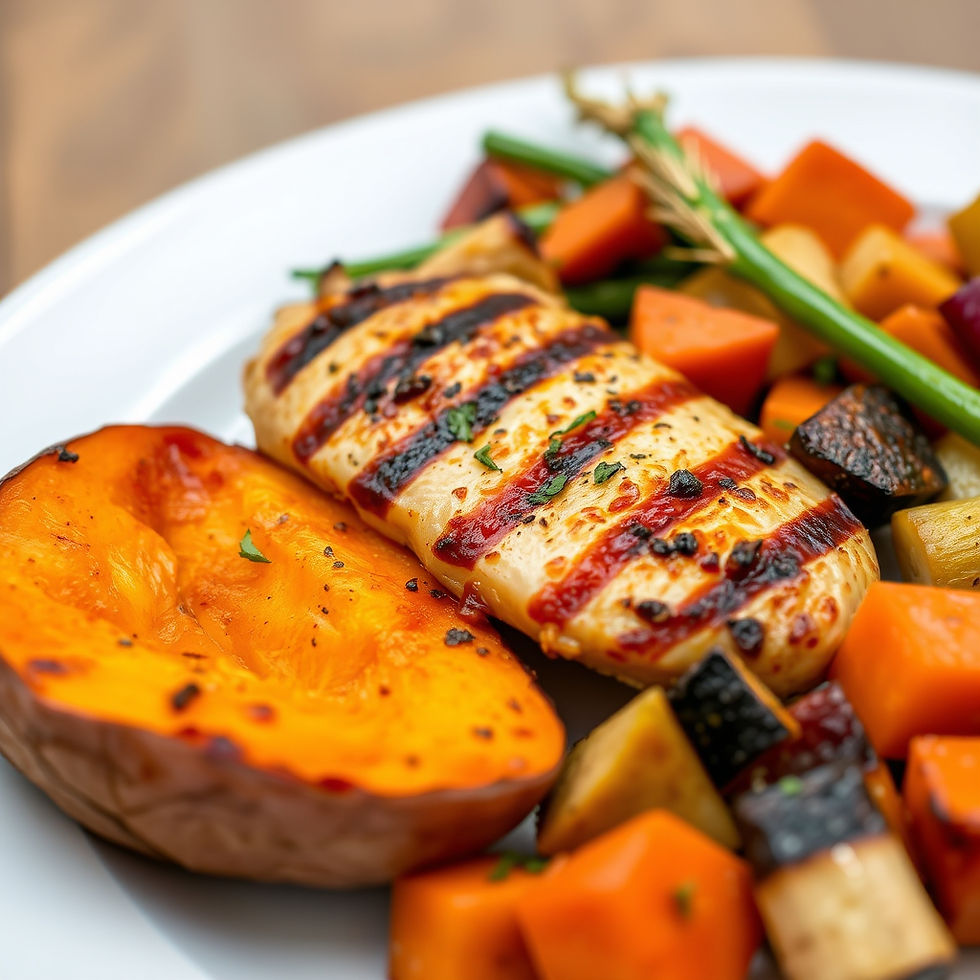
Day 7: 3 ounces Grilled flank steak with one baked sweet potato, 1 cup steamed zucchini, and 1-1/2 cups berries
Nutrition:
Calories: 500 kcal
Protein: 28g (from the 3 oz grilled flank steak)
Carbohydrates: 60g (from the sweet potato and berries)
Fat: 12g to 16g (from the steak and less fat because this recipe does not use 1 tsp butter)
